The Black Box Dilemma: Audits, Latency, and the Offshore Security Myth
Imagine this scenario: A regulator sits across from you and asks a very simple question: “Can you show me exactly how our citizen and customer data is being physically secured?”
If your infrastructure is hosted on a massive US hyperscaler, your answer is essentially: “No. But here is a PDF certificate they emailed me.”
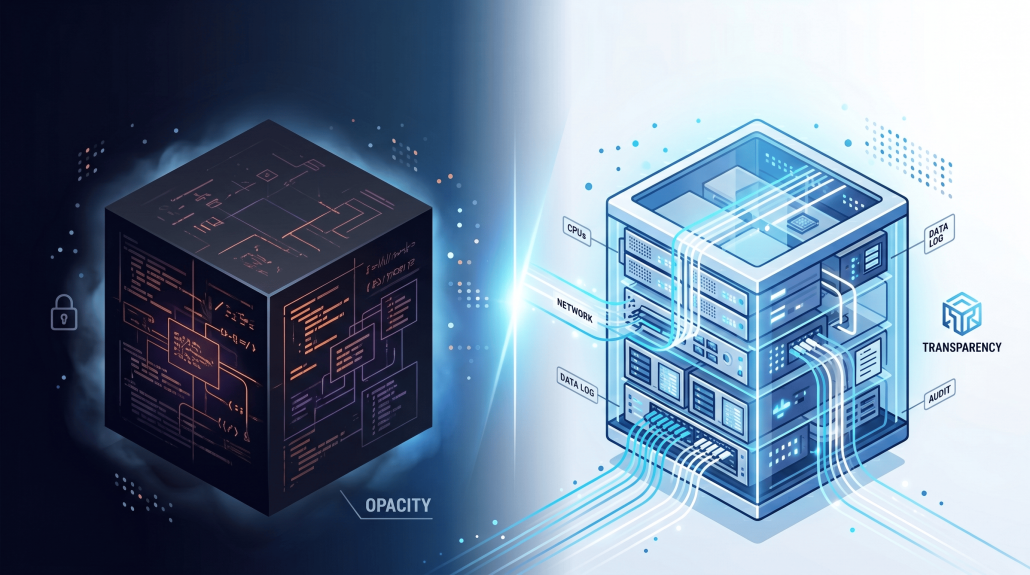
When you put your most sensitive data into a massive offshore cloud, you are dropping it into a black box.
The Un-Auditable Cloud
You can’t take a local regulator on a tour of an offshore server farm. You can’t physically verify that your server rack is isolated. You just have to trust them. And in today’s zero-trust cybersecurity environment, “just trust them” is exactly how you fail a compliance audit.
Beyond the audit nightmare, there is a massive customer experience problem: Latency. If you are running real-time banking apps or critical enterprise software, routing that traffic across the ocean and back creates a lag that kills performance and frustrates your end-users.
Speed and Transparency
This is the exact operational headache we solve at GDMS. We believe you can’t have true security without total transparency, and you can’t have a great user experience with high latency.
Because we build our Tier III datacenters locally, we eliminate the black box entirely. If national cybersecurity authorities or bodies like LaoCERT demand an IT security audit, you can literally walk them through our doors. You can show them the heavy iron, the biometric security, and the protocols in action.
Even better, because the servers are sitting in your own backyard, your applications run at blazing-fast speeds. Your compliance goes up, and your customer experience improves simultaneously.
So, you now know the legal and operational risks of the hyperscaler monopoly ,impossible to audit, and slows down your apps. But how do you actually execute a transition to local infrastructure without disrupting your business?