• Order VPS Online
  • English
    • French
    • Lao
    • Myanmar
    • Chinese (Simplified)
Global Digital Management Solutions
  • Home
  • Services
    • Datacenter Services
      • Colocation Services and Solutions
      • Dedicated Server | Bare Metal Server
      • Backup Solutions
    • Private & Public Cloud Services
      • VPS – Virtual Private Servers
      • VPC – Virtual Private Cloud
      • Disaster Recovery as a Service (DRaaS)
      • Kubernetes as a Service (KaaS)
      • Content Deliver Network (CDN)
      • Government Cloud (GovCloud) in Laos
      • Government Cloud (GovCloud) in Congo
      • Unified Cloud Communication
    • Cybersecurity
      • Cybersecurity Products
    • IT and Telecom Services
      • Telecom Services
      • IT Services
  • News
  • About Us
  • Contact
  • Menu Menu
  • LinkedIn
  • Facebook
  • WhatsApp
  • Rss
  • Youtube

GDMS provides in-country cloud (VPS, Web Hosting, VPC) infrastructure in Vietnam, Laos and Myanmar.

Captial Expenditure clean
Cloud

The Sovereign Blueprint: Taking Back Control of Your Cloud Infrastructure

Over the past few weeks, we’ve covered a lot of ground. We talked about why keeping your data on an offshore US cloud is a massive legal trap, the pain of failing compliance audits, and the operational nightmare of the “black box.”

By now, the executives we speak with usually ask us the exact same question: “Okay, I know I need to get my data off the foreign hyperscalers and bring it in-country to protect my business. But how do I actually do that without spending $10 million to build my own datacenter?”

The DIY Capital Nightmare

are asking the right question. Building your own facility is a massive drain on your resources.

Your job is to innovate and serve your customers. Your job is not pouring concrete, installing industrial cooling systems, or spending two years trying to pass an ISO 27001 audit from scratch. The CapEx alone is enough to kill most digital transformation projects and freeze your IT budget for years.

The “Easy Button” for Digital Sovereignty

That is exactly why we built GDMS. We wanted to give organizations a blueprint for tech independence that protects their bottom line. Whether you are a growing enterprise operating under the Lao National Chamber of Commerce and Industry (LNCCI), or a government ministry building the digital foundations of public service , we have already laid the groundwork.

We spent the time, the capital, and the engineering hours to build state-of-the-art, Tier III datacenters so you don’t have to. We brought the highest international security standards directly to your local market.

The ROI is immediate. When you migrate your critical workloads to GDMS, you shift from a massive CapEx burden to a lean, scalable operational model. You instantly achieve 100% data sovereignty. You pass your local compliance audits with zero friction. And most importantly, you free up your internal teams to focus on what actually matters: driving revenue and serving your customers.

The era of defaulting to offshore hyperscalers is over. If you are looking at your current cloud architecture and realizing it’s time to bring your data home, contact the GDMS team today to set up a quiet, 15-minute chat about what a frictionless, sovereign migration actually looks like.


June 22, 2026
https://www.global-dms.com/wp-content/uploads/2026/06/Captial-Expenditure-clean.jpg 1075 1971 May Thet Htar Aung https://www.global-dms.com/wp-content/uploads/2020/04/logo-GDMS.png May Thet Htar Aung2026-06-22 11:43:382026-06-22 11:43:38The Sovereign Blueprint: Taking Back Control of Your Cloud Infrastructure
Blackbox clean 1
Cloud

The Black Box Dilemma: Audits, Latency, and the Offshore Security Myth

Imagine this scenario: A regulator sits across from you and asks a very simple question: “Can you show me exactly how our citizen and customer data is being physically secured?”

If your infrastructure is hosted on a massive US hyperscaler, your answer is essentially: “No. But here is a PDF certificate they emailed me.”

When you put your most sensitive data into a massive offshore cloud, you are dropping it into a black box.


The Un-Auditable Cloud

You can’t take a local regulator on a tour of an offshore server farm. You can’t physically verify that your server rack is isolated. You just have to trust them. And in today’s zero-trust cybersecurity environment, “just trust them” is exactly how you fail a compliance audit.

Beyond the audit nightmare, there is a massive customer experience problem: Latency. If you are running real-time banking apps or critical enterprise software, routing that traffic across the ocean and back creates a lag that kills performance and frustrates your end-users.


Speed and Transparency

This is the exact operational headache we solve at GDMS. We believe you can’t have true security without total transparency, and you can’t have a great user experience with high latency.

Because we build our Tier III datacenters locally, we eliminate the black box entirely. If national cybersecurity authorities or bodies like LaoCERT demand an IT security audit, you can literally walk them through our doors. You can show them the heavy iron, the biometric security, and the protocols in action.

Even better, because the servers are sitting in your own backyard, your applications run at blazing-fast speeds. Your compliance goes up, and your customer experience improves simultaneously.

So, you now know the legal and operational risks of the hyperscaler monopoly ,impossible to audit, and slows down your apps. But how do you actually execute a transition to local infrastructure without disrupting your business?


June 2, 2026
https://www.global-dms.com/wp-content/uploads/2026/06/Blackbox-clean-1-scaled.png 1429 2560 May Thet Htar Aung https://www.global-dms.com/wp-content/uploads/2020/04/logo-GDMS.png May Thet Htar Aung2026-06-02 17:30:272026-06-02 17:30:27The Black Box Dilemma: Audits, Latency, and the Offshore Security Myth
1 Clean1
Cloud

The Compliance Collision: Why Your Offshore Cloud is Suddenly a Legal Trap

2 Clean

Right now, there is one thing keeping Chief Risk Officers awake at night: the speed of new data regulations.

Five years ago, nobody really cared where your cloud servers were physically located, as long as the uptime was good. But today, the rules of the game have changed entirely. For any organization handling sensitive financial, telecom, or citizen data, the priority is no longer just uptime; it is operational survival.

Governments and central institutions, including the regional central bank, are enforcing incredibly strict Data Protection Acts and financial sector IT guidelines. The message is loud and clear: if you are handling critical financial or citizen data, it needs to stay securely inside the country.

The Nightmare Scenario

This is creating a massive headache for IT leaders who built their networks on foreign hyperscalers.

Keeping your core enterprise data in an offshore cloud has suddenly turned from a “smart IT strategy” into a massive legal liability. If regulators enforce these new data residency laws tomorrow, companies relying on foreign servers will fail their compliance audits instantly. They are staring down the barrel of crushing financial fines and severe damage to their brand trust.

The Zero-Friction Fix

3 Clean

You can’t solve a geographic legal problem with more software. You need physical, localized Datacenter and Colocation infrastructure.

That is exactly what we provide at GDMS. We saw this “compliance collision” coming, which is why we deliver world-class cloud infrastructure that sits inside your own borders. In fact, we recently set the gold standard for compliance in the region by achieving our ISO 27001:2022 Certification , ensuring your data is handled with the strictest international security protocols.

ISO 27001 certified data center Laos, sovereign cloud compliance Laos, GDMS Laos ISO 27001 2022, LEED Datacenter Vientiane security, Laos digital platform regulation ISO 27001, secure hosting eCRVS eBRS Laos

The immediate value to your business is peace of mind. The data never leaves the border, so you never violate the law. You get to stop worrying about regulatory fines and start focusing entirely on growing your business and serving your customers.

Of course, claiming your data is compliant is one thing. Proving it to an auditor is another. What happens when the central bank demands a physical inspection of your data center?

May 14, 2026
https://www.global-dms.com/wp-content/uploads/2026/05/1-Clean1.jpg 1075 1971 May Thet Htar Aung https://www.global-dms.com/wp-content/uploads/2020/04/logo-GDMS.png May Thet Htar Aung2026-05-14 17:45:072026-05-18 16:28:49The Compliance Collision: Why Your Offshore Cloud is Suddenly a Legal Trap
The Sovereignty Illusion: Why
Cloud

The Sovereignty Illusion: Why “Offshore” is Your Biggest Blind Spot

For the last ten years, when it came time to upgrade their digital infrastructure, the easiest answer was simply to hand it over to a massive US cloud provider. It was the default move. AWS, Azure, Google—it was easy, it scaled, and it made sense at the time.

But as your enterprise scales and your data becomes your most valuable business asset, that “easy” choice has quietly turned into a massive blind spot.

There is a dangerous assumption floating around the industry right now. A lot of brilliant IT leaders believe that because their data is sitting on a hyperscaler’s server located in a regional hub, it is protected by local laws.

Unfortunately, it is wrong. We call it the Sovereignty Illusion.

The Jurisdiction Trap

When it comes to the cloud, physical location matters a lot less than jurisdiction. Under frameworks like the US CLOUD Act, any American-owned cloud provider can be legally forced to hand over data based on foreign warrants.

Think about what that actually means for your business. If your core banking data, your customer registries, or your company’s most sensitive intellectual property is sitting on one of these hyperscalers, you are surrendering your competitive edge. You can encrypt it and monitor it all you want, but you do not truly own your data if you do not control the laws that govern it.

Protecting Your Greatest Asset

You cannot build a secure, resilient enterprise if your foundation is ultimately controlled from Silicon Valley.As regulatory bodies like the Lao Ministry of Technology and Communications (MTC) continue to mandate stricter national data governance, localized infrastructure is no longer optional.

This is exactly why we built GDMS. We bypass the foreign cloud monopoly by building Tier III infrastructure right inside your country’s borders. We take the world’s highest security standards and deploy them directly behind your national firewall, offering truly secure, sovereign Private & Public Cloud Services.

The value to you is absolute control. Your data stays localized, on heavy iron built for your specific workloads, and answers only to your local laws. You eliminate the foreign interference, protect your brand’s reputation, and get your sovereignty back.

The Next Threat Escaping foreign jurisdiction is critical to your sovereignty. But what happens when your own local regulators come knocking to inspect your infrastructure?

Next time, we will explore “The Compliance Collision”—and why keeping data in an offshore black box is about to trigger massive legal penalties across the region.

March 30, 2026
https://www.global-dms.com/wp-content/uploads/2026/03/Sovereignty-Illusion-Middle-scaled.jpg 1428 2560 May Thet Htar Aung https://www.global-dms.com/wp-content/uploads/2020/04/logo-GDMS.png May Thet Htar Aung2026-03-30 13:42:132026-03-30 14:52:20The Sovereignty Illusion: Why “Offshore” is Your Biggest Blind Spot
ISO 27001 certified data center Laos, sovereign cloud compliance Laos, GDMS Laos ISO 27001 2022, LEED Datacenter Vientiane security, Laos digital platform regulation ISO 27001, secure hosting eCRVS eBRS Laos
Cloud

GDMS Laos Achieves ISO 27001:2022 Certification: Setting the Security Benchmark for Digital Laos

A New Standard for Digital Trust in the Lao PDR

In an era where digital transformation is driving the nation’s progress, the foundation of secure and trusted infrastructure is non-negotiable. For GDMS Laos, a company deeply invested in building secure sovereign cloud solutions for the Lao PDR, this commitment is our core mission.

We are proud to announce that GDMS Laos has achieved the globally recognized ISO/IEC 27001:2022 certification for our Information Security Management System (ISMS).

The Certified Scope: Protecting Laos’ Critical Digital Assets

This certification is highly specific and covers the most vital components of the nation’s digital foundation that we operate:

  • The LEED Datacenter: The Ministry of Technology and Communications’ managed data center in Vientiane.

  • The GDMS Cloud Infrastructure (3 AZs): Our entire in-country sovereign cloud platform, spanning across three Availability Zones (AZs) to ensure resilience and high availability.

  • Managed IT Services: The security of the services we provide to our customers, including key government and enterprise platforms hosted on this infrastructure.

ISO 27001: Global Standard Meets Lao Legal Requirements

This achievement is not just an international recognition; it is our fulfillment of a mandatory national requirement for secure data hosting.

The recent directives issued by the government of the Lao PDR, specifically the Decision on Digital Platform, explicitly state that the “data storage location must comply with the international standard on data security ISO/IEC 27001.”.

By achieving this certification for the LEED Datacenter and our 3-AZ cloud platform, GDMS Laos has definitively met this critical legal obligation. This confirmation of compliance is paramount for every customer using our services, ensuring that:

  1. Mandatory Compliance is Met: Our infrastructure provides a fully compliant foundation for hosting all digital platforms and electronic transaction services as defined by the latest Lao PDR regulations.

  2. Verifiable Security: The certification confirms that our systematic approach to security (including confidentiality, integrity, and availability) is audited and validated against the world’s most stringent information security standard.

  3. Local Leadership Confirmed: Operating the national government data center (LEED) and hosting platforms like eBRS, eCRVS, and LESMIS, our certification confirms we are the leading sovereign cloud provider that meets both the technical and mandatory regulatory demands of the market.

This validation provides complete assurance that your data is handled with local control backed by non-negotiable international security validation.

ISO 27001 certified data center Laos, sovereign cloud compliance Laos, GDMS Laos ISO 27001 2022, LEED Datacenter Vientiane security, Laos digital platform regulation ISO 27001, secure hosting eCRVS eBRS Laos

Solidifying Leadership in Sovereign Cloud

As the recognized leading sovereign cloud infrastructure provider in Laos, operating the nation’s key government data center (LEED) in partnership with the MTC and hosting vital e-government services, this certification is non-negotiable.

It solidifies our commitment. Our clients now benefit from verifiable proof that their data is secured by a locally operated company whose processes adhere to global best practices. This is the definition of trusted digital sovereignty: local control backed by international security validation.

We believe this standard is essential for institutions looking to deploy critical services without compromising on data privacy or national security.

Moving Forward

While this is a significant milestone, security is an ongoing commitment, not a destination. We will continue to evolve our ISMS to stay ahead of emerging threats and maintain the highest levels of operational excellence.

Our priority remains clear: Your security, our priority.

November 25, 2025
https://www.global-dms.com/wp-content/uploads/2025/11/9138d2_05c1b6701b7b4277a30a1bfc8b2ce527mv2.jpg 750 1000 Mathieu https://www.global-dms.com/wp-content/uploads/2020/04/logo-GDMS.png Mathieu2025-11-25 17:41:442025-11-25 17:52:27GDMS Laos Achieves ISO 27001:2022 Certification: Setting the Security Benchmark for Digital Laos
Smart ODSC Laos, UNDP digital government Laos, Laos e-government cloud hosting, sovereign cloud provider Laos, TaxRIS integration Laos, FinLink integration Laos, digital public infrastructure Laos, eCRVS hosting Laos, EBRS hosting Laos, digital service adoption Laos, Laos government data sovereignty, Lao digital transformation strategy, Laos e-service interoperability, GDMS sovereign infrastructure Laos
Cloud

Smart ODSC: Building the Digital Foundations of Public Service in Laos

The Government of Lao PDR is taking a decisive step forward in digital transformation with the launch of the Smart One Door Service Centre (ODSC) initiative, sponsored by UNDP.

What is Smart ODSC?

ODSCs are designed as local hubs where citizens can access multiple government services in one place — physically, through web portals, and eventually through super-apps like Gov-X.

Unlike projects that focus only on creating a front-end application, Smart ODSCs go deeper. They are being built at the core of government workflows, connecting directly to critical national systems such as:

  • TaxRIS and FinLink at the Ministry of Finance for payments and revenue services

  • National ID systems at the Ministry of Public Security for secure authentication

  • Other cross-ministry platforms for service standardization and data sharing

By embedding interoperability and data-sharing principles from the start, ODSCs have the potential to become a cornerstone of Digital Public Infrastructure (DPI) in Laos.

Why is ODSC Strategic for Laos?

The UNDP Digital Maturity Assessment (DMA) 2022 found that Lao PDR remains at a digitally nascent stage, with a country-level score of just 1.7/5, among the lowest in ASEAN for internet access and digital service maturity. Ministries are only at an “emerging” stage, while provinces remain nascent.

The assessment identified several challenges:

  • Fragmentation: ministries working in silos with weak collaboration

  • Low adoption: citizens often revert to paper due to lack of user-centric design

  • Infrastructure gaps: limited use of the national data centre and lack of enterprise architecture

  • Digital literacy: fewer than half of adults have basic digital/ICT skills

ODSC directly addresses these issues by:

  • Standardizing processes across ministries

  • Integrating payments and data flows into national systems

  • Expanding inclusivity by connecting citizens in both cities and remote provinces

  • Improving trust and adoption by making digital channels faster, simpler, and more reliable than traditional workflows

This is why ODSC is so strategic: it responds directly to the gaps identified by the DMA and supports the National Digital Economy Strategy (2021–2030), which aims to move half of government services online within five years.

GDMS: Hosting the Digital Backbone

At Global Digital Management Solutions (GDMS), we are proud to play a key role in this transformation. In September 2025, GDMS was awarded the contract by UNDP to provide the cloud hosting infrastructure for the Smart ODSC platform.

Our role is to ensure that Smart ODSC services are:

  • Hosted securely in sovereign, in-country cloud environments

  • Connected directly to Ministry of Finance platforms like TaxRIS and FinLink through secure APIs

  • Protected with robust cybersecurity and compliance frameworks

  • Interconnected domestically, ensuring government data stays in Laos and services remain fast and reliable

This builds on our existing support for other national platforms, including eCRVS (electronic Civil Registration and Vital Statistics), EBRS (electronic Business Registration System), and others already running on GDMS sovereign cloud.

Looking Ahead

Laos is laying the digital foundations of a citizen-centric state. By aligning with the principles of Digital Public Infrastructure — identity, payments, and interoperability — Smart ODSCs will help ensure government services are not only online, but also truly effective, inclusive, and scalable.

GDMS is proud to provide the infrastructure layer that makes this vision possible. As more government platforms come online, we will continue to focus on building secure, sovereign, and resilient systems that empower Laos’ digital transformation.

September 9, 2025
https://www.global-dms.com/wp-content/uploads/2025/09/Cloud-Computing-for-government.webp 350 650 Mathieu https://www.global-dms.com/wp-content/uploads/2020/04/logo-GDMS.png Mathieu2025-09-09 14:20:352025-09-09 14:20:35Smart ODSC: Building the Digital Foundations of Public Service in Laos
cybersecurity services for government in Laos, public private cybersecurity collaboration in Laos, Laos digital technology management system, capacity building cybersecurity Laos, incident response training for Lao enterprises, cybersecurity awareness training in Laos, simulation‑based phishing drills Laos, secure ICT use Lao public sector, licensing for cybersecurity providers Laos, national cybersecurity law Laos compliance
Cloud

Strengthening Cybersecurity Capacity in Laos: Public–Private Collaboration in Action

Read more
July 29, 2025
https://www.global-dms.com/wp-content/uploads/2024/09/Cloud-security-1000-pic-scaled-1.jpg 1707 2560 Mathieu https://www.global-dms.com/wp-content/uploads/2020/04/logo-GDMS.png Mathieu2025-07-29 16:32:092025-07-29 16:32:09Strengthening Cybersecurity Capacity in Laos: Public–Private Collaboration in Action
PHISHING FEATURE IMAGE 1920 X 1280 1 4192250032
Cloud

Strengthen Your Human Firewall: GDMS Launches Phishing Simulation & Awareness Platform in Laos, Myanmar, and Cambodia

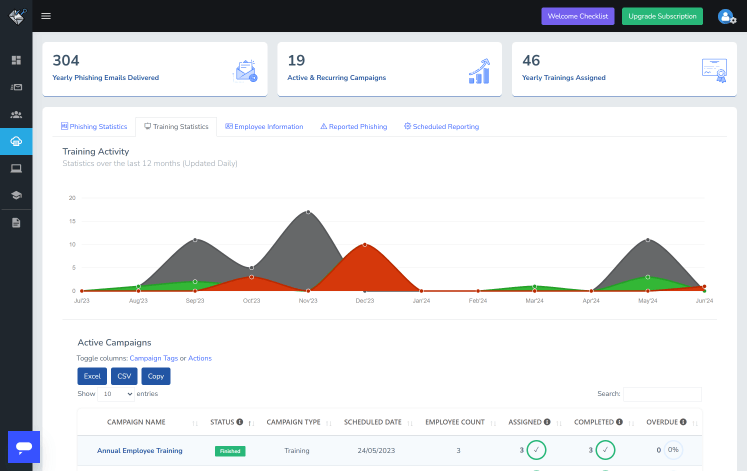
Phishing remains one of the most common and effective cyber threats facing organizations today—especially in developing digital ecosystems like Southeast Asia. At GDMS, we believe cybersecurity starts with people. That’s why we’re proud to announce the launch of a powerful new tool across all our markets: a phishing simulation and security awareness platform, powered by CanIPhish.

This SaaS platform is designed to help organizations train employees continuously, simulate real-world attacks, and align with international compliance standards like ISO/IEC 27001, SOC 2, and the NIST Cybersecurity Framework.

phishing simulation and security awareness platform, ISO/IEC 27001 compliance, ISO 27001 certification, SOC 2 audit, NIST Cybersecurity Framework, cybersecurity SaaS for emerging markets, affordable cybersecurity awareness tool, phishing simulation for SMEs in Southeast Asia, continuous micro-learning cybersecurity training

Why It Matters

Cyber attackers are getting smarter—and more targeted. With email remaining the top attack vector, businesses need more than a basic training session. They need an adaptive, data-driven approach to prepare staff for today’s threats.

Our new platform delivers just that.

What You Can Expect

  • Realistic Phishing Simulations
    Simulate email and website attacks that reflect real techniques like spear phishing, credential harvesting, and domain spoofing.

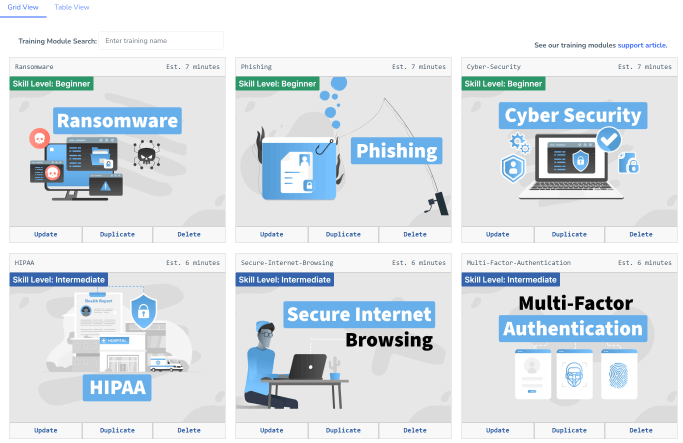
  • Instant Micro-Learning
    When an employee clicks a simulated phishing email, they’re redirected to a short, engaging training module—on the spot.

  • Gamified Engagement
    Track individual progress with dashboards, badges, and certificates that keep users motivated and accountable.

  • Compliance-Friendly
    Whether you’re pursuing ISO 27001 certification or preparing for a SOC 2 audit, this platform helps demonstrate ongoing employee awareness and risk mitigation.

  • Local Support, Regional Reach
    Available in Laos, Myanmar, Cambodia, and other GDMS markets, with setup and support tailored to local infrastructure and policy needs.

phishing simulation and security awareness platform, ISO/IEC 27001 compliance, ISO 27001 certification, SOC 2 audit, NIST Cybersecurity Framework, cybersecurity SaaS for emerging markets, affordable cybersecurity awareness tool, phishing simulation for SMEs in Southeast Asia, continuous micro-learning cybersecurity training

Who It’s For

This platform is ideal for:

  • SMEs and enterprises managing sensitive data

  • Banks, telecom providers, public institutions, and NGOs

  • Organizations working toward compliance or audit readiness

  • Any company looking for a cybersecurity awareness tool that works


Ready to See It in Action?

If you’re looking for a practical, measurable, and affordable way to reduce phishing risk, our team is here to help. We’ll guide you through the platform and help you tailor it to your organization’s needs.

Contact us at contact@global-dms.com to schedule a demo or learn more.

Let’s make your people your strongest defense.

June 10, 2025
https://www.global-dms.com/wp-content/uploads/2025/06/PHISHING_FEATURE-IMAGE-1920-X-1280-1-4192250032.jpeg 1280 1920 Mathieu https://www.global-dms.com/wp-content/uploads/2020/04/logo-GDMS.png Mathieu2025-06-10 11:07:112025-06-10 11:07:11Strengthen Your Human Firewall: GDMS Launches Phishing Simulation & Awareness Platform in Laos, Myanmar, and Cambodia
sovereign cloud infrastructure Laos, government cloud services Laos, data center investment Laos, World Bank cloud strategy Laos, Lao National Cloud, digital transformation Laos cloud, secure cloud hosting for ministries, public sector cloud adoption Laos, green data centers Southeast Asia, OpenStack cloud provider Laos, in-country data hosting solutions, compliant cloud infrastructure Laos, hybrid cloud Laos government, Lao domestic cloud connect, sustainable cloud computing Laos, private cloud vendor Laos, local cloud services for government agencies, digital sovereignty cloud Laos
Cloud

How GDMS Aligns with the World Bank Group’s Cloud Strategy in Laos

In its landmark study Advancing Cloud and Data Infrastructure Markets (2024), the World Bank Group (WBG) outlines a transformative strategy for helping low, and middle-income countries modernize their digital infrastructure. The goal is clear: move beyond traditional infrastructure investment toward enabling vibrant, sovereign, and sustainable cloud ecosystems, driven by the private sector, supported by government, and grounded in local development goals.

At GDMS, we are proud to say that our work in Laos is fully aligned with this vision. Here’s how.


Supporting Sovereign Cloud Infrastructure

WBG’s strategy emphasizes that cloud infrastructure must reflect national priorities, regulatory frameworks, and security needs. As the study states:

“Countries are increasingly seeking to maintain control over the location and governance of their data.”
(WBG Cloud Study, 2024)

GDMS has built and continues to operate the Lao National Cloud, hosting critical workloads such as:

  • eCRVS (civil registration platform for the Ministry of Home Affairs)

  • eBRS (business registration platform for the Ministry of Industry and Commerce)
  • LESMIS (education sector information system for the Ministry of Education and Sports)

These platforms are fully hosted in-country, under Lao law, ensuring data sovereignty and jurisdictional control—key pillars of the WBG approach.

Enabling Market-Driven Growth, Not Government Ownership

The WBG model emphasizes creating a healthy digital market, not state-run infrastructure. The role of government is to create policy clarity, while private providers deliver innovation and services.

GDMS supports this by:

  • Offering Infrastructure-as-a-Service (IaaS) to government agencies and enterprises

  • Providing secure, scalable environments on-demand without requiring capital-intensive public buildout

  • Working with regulators to ensure lawful, standards-based cloud service delivery

We don’t sell equipment—we build ecosystems.

Promoting Hybrid, Open, and Vendor-Neutral Cloud

According to the WBG:

“Hybrid and multicloud models optimize performance and reduce risk… especially important for maintaining flexibility and sovereignty.”
(WBG Cloud Study, 2024)

GDMS designs cloud environments that:

  • Use open-source platforms like OpenStack and Proxmox

  • Allow interoperability with global standards

  • Prevent vendor lock-in, which is critical for long-term national control

Building Regional Connectivity with Local Anchors

WBG encourages cross-border infrastructure aggregation to overcome scale limitations in smaller economies. GDMS is responding with:

  • The Lao Domestic Cloud Connect initiative, which lays the foundation for a regional cloud and data exchange point

  • Partnerships with local ISPs and carriers to promote interconnectivity, IXP participation, and digital sovereignty

By anchoring traffic inside Laos, we reduce latency, improve security, and keep economic value local.

A Sustainable Cloud Built on Clean Energy

Sustainability is non-negotiable in the WBG’s approach:

“Energy-efficient and renewable-powered data centers should be prioritized.”
(WBG Cloud Study, 2024)

GDMS operates Laos’ first LEED data center in Vientiane, developed in collaboration with the Ministry of Technology and Communications and Japanese partners under the Joint Crediting Mechanism (JCM). This state-of-the-art facility exemplifies:

  • Low-carbon compute and storage powered by Laos’ abundant hydropower resources.

  • Leadership in Energy and Environmental Design (LEED) certification, demonstrating a commitment to environmental responsibility and energy efficiency.

  • Approximately 40% energy efficiency improvement compared to conventional data centers, contributing to significant CO₂ emission reductions .

This green infrastructure not only supports the country’s digital transformation but also aligns with international sustainability standards, positioning Laos as a responsible player in the global digital economy.

Strengthening National Capabilities

The WBG calls for investments not only in infrastructure but in local skills and operational capacity.

GDMS contributes by:

  • Training national staff in network operations, security, and compliance

  • Supporting a local DevOps and data center workforce

  • Sharing best practices with ministry IT teams to raise the national benchmark

A Model for Emerging Economies

The WBG’s framework is clear: enable cloud ecosystems that are local, trusted, sustainable, and market-led.

GDMS in Laos is proving that this model is not only possible, it’s already underway. As cloud demand grows, we remain committed to serving as a trusted local partner, empowering government, enabling digital services, and protecting sovereignty at every step.


Sources:
World Bank Group, “Advancing Cloud and Data Infrastructure Markets: Strategic Directions for Low- and Middle-Income Countries,” 2024.

https://www.worldbank.org/en/publication/advancing-cloud-and-data-infrastructure-markets

May 26, 2025
https://www.global-dms.com/wp-content/uploads/2025/05/ff_googleinfrastructure2_large-1440x960-1.jpg 960 1440 Mathieu https://www.global-dms.com/wp-content/uploads/2020/04/logo-GDMS.png Mathieu2025-05-26 13:51:592025-05-26 13:51:59How GDMS Aligns with the World Bank Group’s Cloud Strategy in Laos
sovereign cloud for emerging markets, AI and data sovereignty Southeast Asia, local cloud infrastructure Laos, digital public services hosting, government cloud compliance
Cloud

Why Sovereign Cloud Infrastructure Matters More Than Ever in Emerging Markets

Introduction: India’s AI Surge Sends a Clear Message to the Region

As India accelerates its adoption of artificial intelligence (AI), policymakers are calling for stronger sovereign cloud infrastructure. In a recent interview, India’s MeitY Secretary S. Krishnan warned that without resilient and locally governed digital infrastructure, countries risk losing control over critical data and becoming overly dependent on foreign platforms (Outlook Business).

This warning is just as relevant—if not more so—for smaller, fast-digitizing nations across Southeast Asia and other emerging regions.

At GDMS, operating in frontier markets like Laos and Myanmar, we’ve seen firsthand how AI, digital public services, and regional cloud adoption are outpacing local infrastructure readiness. It’s not just about keeping up with global trends—it’s about national resilience, legal control, and future-proofing digital sovereignty.

What Is a Sovereign Cloud—and Why Should Governments Care?

A sovereign cloud is a cloud infrastructure that ensures data is stored, processed, and governed under the laws of the country where it is generated. It typically involves:

  • Hosting within national borders

  • Jurisdiction under local law

  • Controlled access and data classification policies

  • Independence from foreign surveillance or sanctions

In countries with evolving legal frameworks, limited in-country infrastructure, or reliance on donor-funded systems, this kind of setup is more than a technical choice—it’s a safeguard for autonomy.

AI Is Accelerating the Sovereignty Gap

AI requires massive compute power, training data, and low-latency infrastructure. Without a sovereign cloud, this data often leaves the country—whether for model training, inference, or storage.

In markets like Laos, Cambodia, and Myanmar, this creates three risks:

  1. Compliance Conflicts
    Sensitive citizen data may be stored abroad, conflicting with national data laws or political sensitivities.

  2. Limited Leverage
    Nations become passive consumers of AI systems trained elsewhere, on data from elsewhere.

  3. Digital Dependency
    A generation of civil servants and local companies grows up dependent on hyperscaler platforms, with no control over costs or continuity.

Lessons from India: The Case for Local Cloud Capacity

India is not alone in recognizing these risks. Countries like France, Indonesia, and Vietnam are also investing in national cloud strategies, sometimes backed by public-private partnerships. The lesson? Sovereign infrastructure isn’t a luxury—it’s a prerequisite for scaling digital services and AI responsibly.

In India, the government is exploring partnerships with domestic cloud providers like Yotta Infrastructure to host sensitive AI applications securely within national borders (CloudStackCollab.org).

For smaller markets, this isn’t about replicating India—it’s about adapting the principle: Build what you need, keep control, stay compliant.

What GDMS Is Doing in Laos and Beyond

At GDMS, we design and operate sovereign-grade cloud environments tailored to the needs of emerging markets. Our infrastructure supports both public and private sector clients, depending on the country:

  • In Laos, we host critical workloads for ministries, public institutions, and private enterprises—including civil registry systems (eCRVS, EBRS), education platforms, health databases, and national web portals.

  • In Myanmar and Cambodia, we support private sector organizations with secure cloud hosting, local infrastructure advisory, and data compliance strategies.

Our hosting in Laos spans three in-country availability zones, with full ownership of hardware, telecom links, and security stack. All operations align with national data control regulations, including Laos’ Prime Ministerial Decrees of 2016 and 2026, as well as regional cybersecurity and data protection frameworks.

Conclusion: Regional Cooperation, Local Control

India’s stance on sovereign AI infrastructure sends a powerful signal, but it should not be viewed in isolation. For countries across Asia and Africa, the rise of AI, combined with geopolitical tensions and hyperscaler dependency, makes sovereign cloud a strategic necessity.

For governments, the next step is not just policy—but action:

  • Define what workloads must remain sovereign

  • Build or procure cloud environments with national oversight

  • Incentivize private operators to build capacity, not just consume it

At GDMS, we’re ready to support this transition—one sovereign system at a time.

Sources and Further Reading

  • Rising AI Adoption Makes Sovereign Cloud Infrastructure Critical – MeitY Secretary (Outlook Business)

  • Data Sovereignty: How Critical It Is for India’s Digital Roadmap (ET CIO)

  • TechPolicy Press – India’s Data Localization Push

  • CloudStackCollab – How Yotta is Strengthening India’s Cloud Infrastructure

April 25, 2025
https://www.global-dms.com/wp-content/uploads/2025/04/cloud-computing-netapp-680x350-1.webp 350 680 Mathieu https://www.global-dms.com/wp-content/uploads/2020/04/logo-GDMS.png Mathieu2025-04-25 15:30:442025-04-25 15:30:44Why Sovereign Cloud Infrastructure Matters More Than Ever in Emerging Markets
Page 1 of 6123›»

Search

  • English
  • Français (French)
  • Lao
  • Myanmar
  • 简体中文 (Chinese (Simplified))
gdms logo

Datacenter Services

Private & Public Cloud Services

Cybersecurity

Telecom Services

IT Services

Contact us

Vietnam Office
Myanmar Office
Laos Office
Cambodia Office
Congo Office
contact@global-dms.com

© 2025 Global Digital Management Solutions | Privacy Policy |

Scroll to top